What's New in ZeroExport 1.12: Start Screen, Left Rail, and Builder Polish
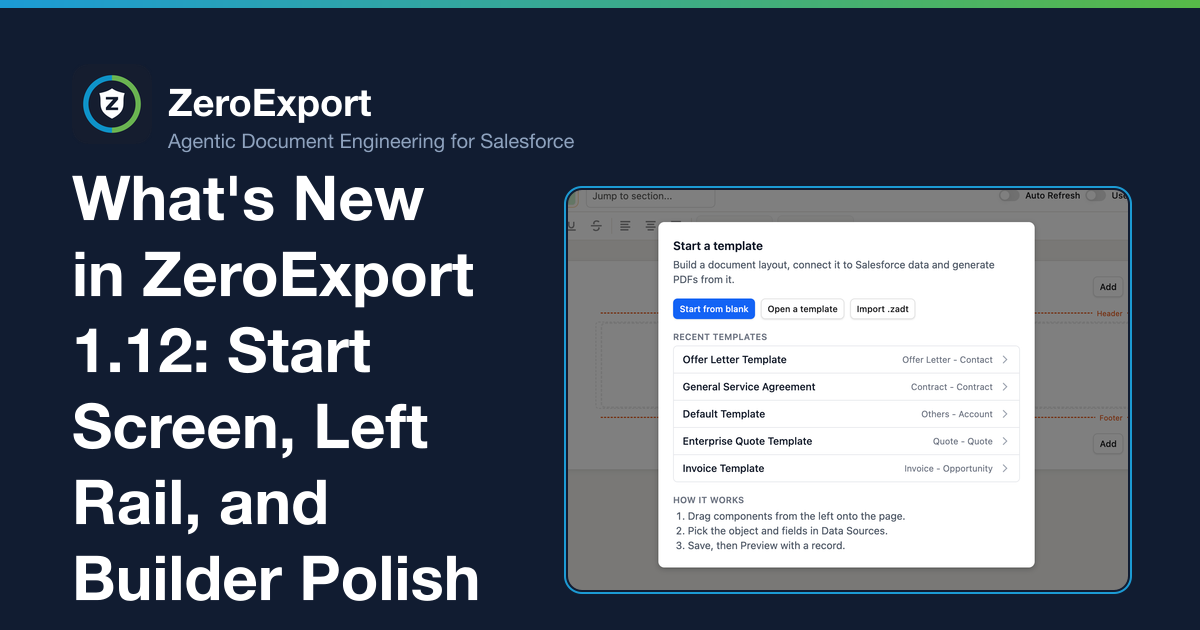
ZeroExport 1.12 adds a start screen, moves data sources and branding to the left rail, lists all visibility conditions in one place, and unifies every builder dialog.
Insights on Salesforce document generation, simplifying setup, best practices, and tips for getting the most out of ZeroExport.
ZeroExport 1.12 adds a start screen, moves data sources and branding to the left rail, lists all visibility conditions in one place, and unifies every builder dialog.
Software licensing is rarely the real cost of Salesforce document generation. Here is what the 3-year TCO looks like across four common approaches.
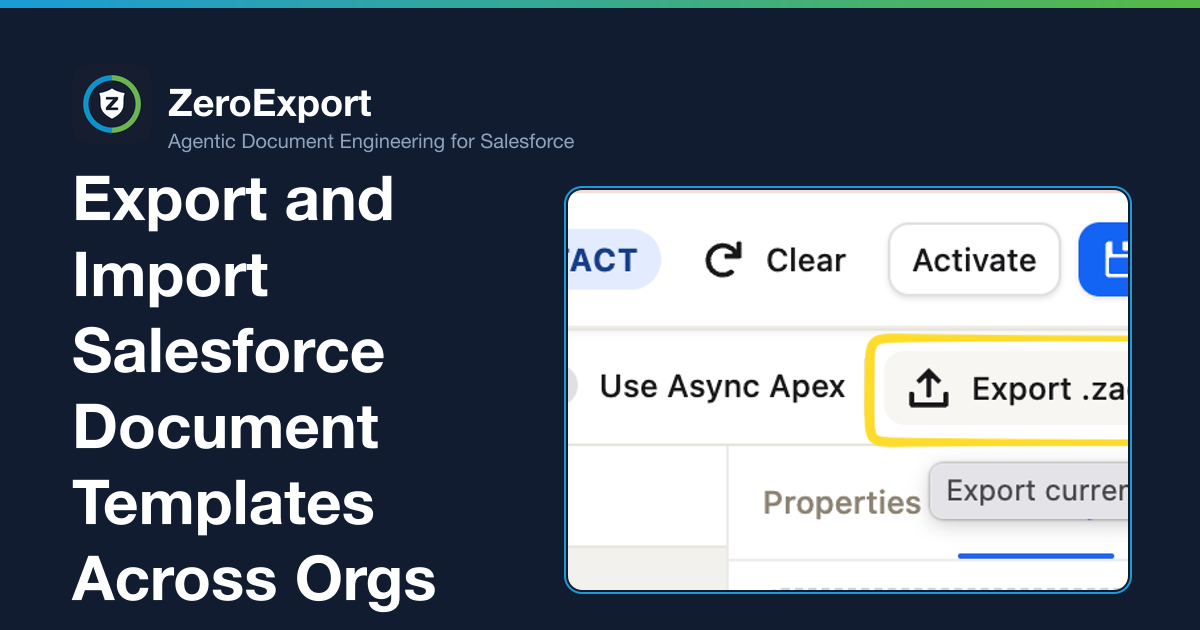
Move ZeroExport templates between Salesforce orgs with one .zadt file. Schema validation checks every reference before anything is saved.
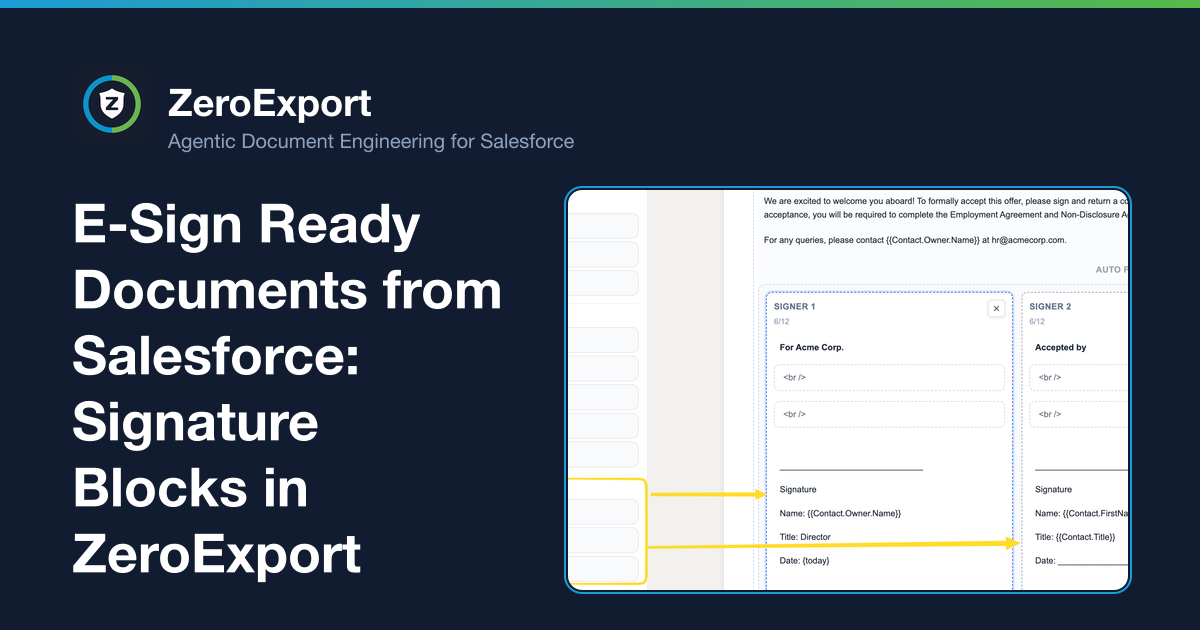
Add DocuSign- and Conga Sign-compatible signature blocks to any ZeroExport template in seconds. Three presets place the right anchor text automatically.
Learn how Salesforce admins govern record-level document edits with permissions, locked sections, read-only content, and controls that protect master templates.
Measure Salesforce document generation maintenance costs, including consultant fees, admin hours, template rework, change delays, and document-only customizations.
ZeroExport infers which table rows repeat, and where each group ends, from the merge fields in the row. See how that replaces start/end loop tags in Salesforce document templates.
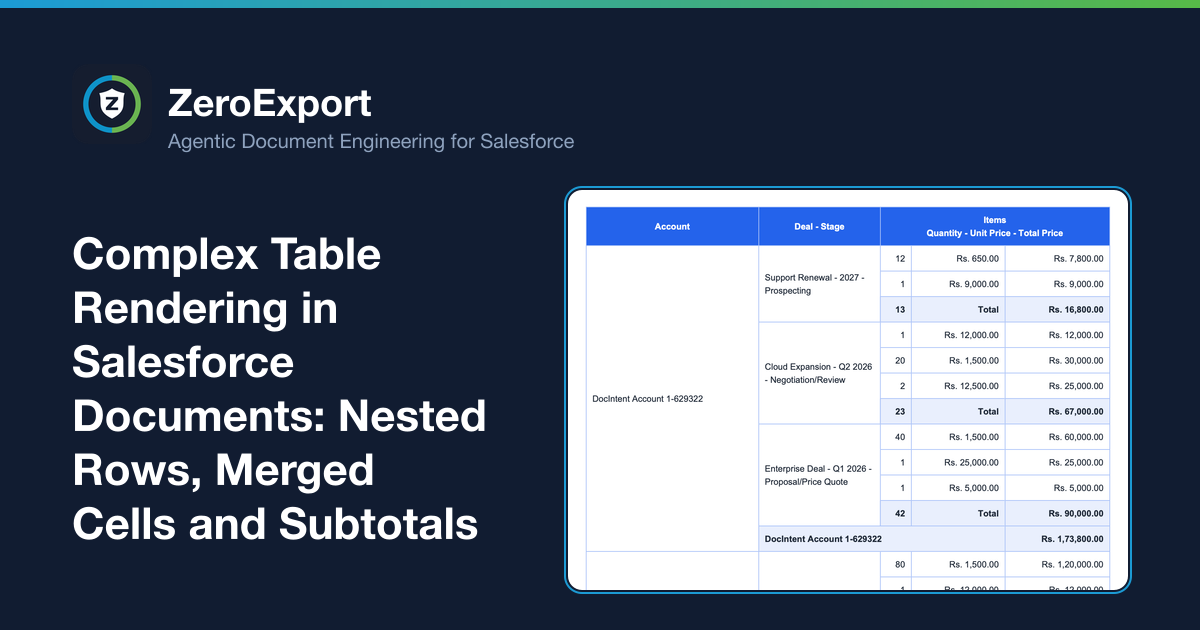
Why nested tables, vertically merged cells and multi-level subtotals break in most Salesforce document generation tools, and how compiling the table geometry before rendering keeps them intact.
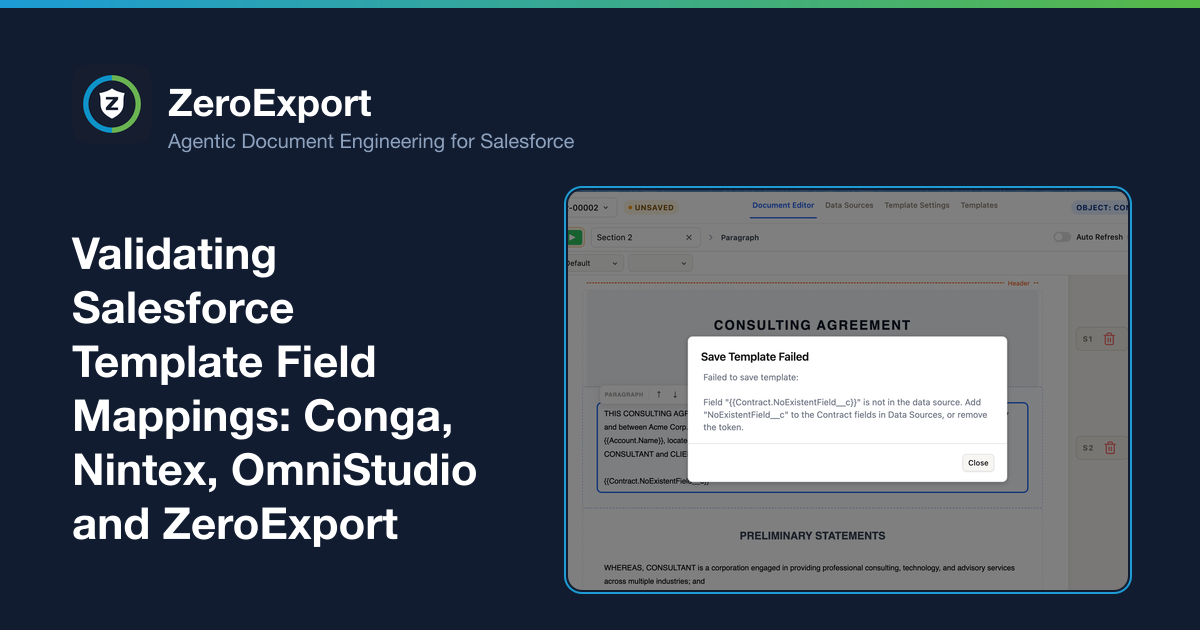
Most Salesforce document tools leave you to verify every merge field by hand, so a stale mapping prints blank in a sent document. How Conga Composer, Nintex DocGen and OmniStudio handle field mappings, and how ZeroExport validates them on every save.
Nintex DocGen assembles document packages from Word, Excel, and PowerPoint templates. Here is how that model compares to a structure-aware template, which kind of complexity each one solves, and when Nintex is the right answer.
A direct comparison of ZeroExport and Conga Composer for Salesforce document generation: the template model each one uses, how they handle nested data and silent failures, and the cases where Conga is still the right choice.
Every Salesforce docgen tool has a drag-and-drop builder now. Most of them hand you a blank canvas and a styling panel, which quietly makes the formatting your job. Here is the difference between a builder and defaults that are already right.